Chapter 13
Gearing Up Without Going Broke
Renting, borrowing, buying used
Here’s the anxiety that stops more would-be backpackers than any bear: the price tag. Add up new versions of everything in Part II and you get a number that looks like a serious hobby’s entry fee. But you don’t need to spend that, and you shouldn’t, not before you know whether you love this. This chapter is the money chapter, and its whole message is: start cheap, prove you like it, then invest in what lasts.
The Smart Order: Rent, Borrow, Buy Used, Then Buy New
Don’t buy a full kit before your first trips. Rent or borrow the big expensive items to try backpacking, buy used or budget gear as you commit, and save full-price new purchases for the few things where quality and fit really matter, footwear above all.
This staged approach solves two problems at once. It slashes your upfront cost from “serious investment” to “cost of a nice dinner out,” and, just as valuable, it lets you try before you buy, so when you do spend real money, you know what you actually want. The person who buys a complete new kit before trip one often discovers they hate their pack, chose the wrong tent, and didn’t need half of it. The person who rents for two trips buys exactly right the first time. Patience here is worth hundreds of dollars.
Renting Backpacking Gear
Renting lets you take a full backpacking kit for a weekend for a fraction of buying it, ideal for your first trips or occasional use. Outdoor specialty shops, some outfitters, and many university outdoor programs rent tents, packs, sleeping bags, pads, and stoves.
Renting is the lowest-commitment way to try the sport with good gear. As a rough guide, individual items often rent for around $10–30 per weekend each, and some outfitters offer complete backpacking packages (pack, tent, bag, pad, stove) for roughly $50–150 for a few days, a tiny fraction of buying it all. (Prices vary widely by region and outfitter; confirm locally.) Where to look: dedicated gear-rental companies (some ship to you), local outdoor shops, and, often the cheapest option, university outdoor recreation programs, which rent quality gear at low rates and are frequently open to the public or to community members. One shift worth noting: some large national retailers have scaled back their rental programs in recent years, so specialty outfitters and campus programs are now often your best bet. Rent the big-ticket items (pack, tent, bag, pad), and you’ve tried backpacking for very little.
Borrowing and the Community
Before you rent or buy, ask around, experienced hikers often have spare or old gear they’ll lend a beginner, and the outdoor community is famously welcoming to newcomers. Borrowing costs nothing and comes with free advice.
Backpackers accumulate gear (it’s a documented side effect of the hobby), and many have a retired pack or an extra sleeping bag they’re happy to lend someone giving the sport a try. Ask friends, coworkers, family, local hiking clubs, and outdoor groups. Borrowing gets you onto the trail for free, and it usually comes bundled with something more valuable than the gear: a knowledgeable person who’ll answer your questions, check your packing, and maybe come along. Local hiking clubs and online community groups are full of people who remember being beginners and want to help. Use them, and pay it forward later.
Buying Used Gear
Used gear is where committed beginners save the most: quality outdoor equipment is durable and holds up well secondhand, and a robust used market means you can buy proven gear at 30–60 percent off new. Some categories are great used; a few should be bought new.
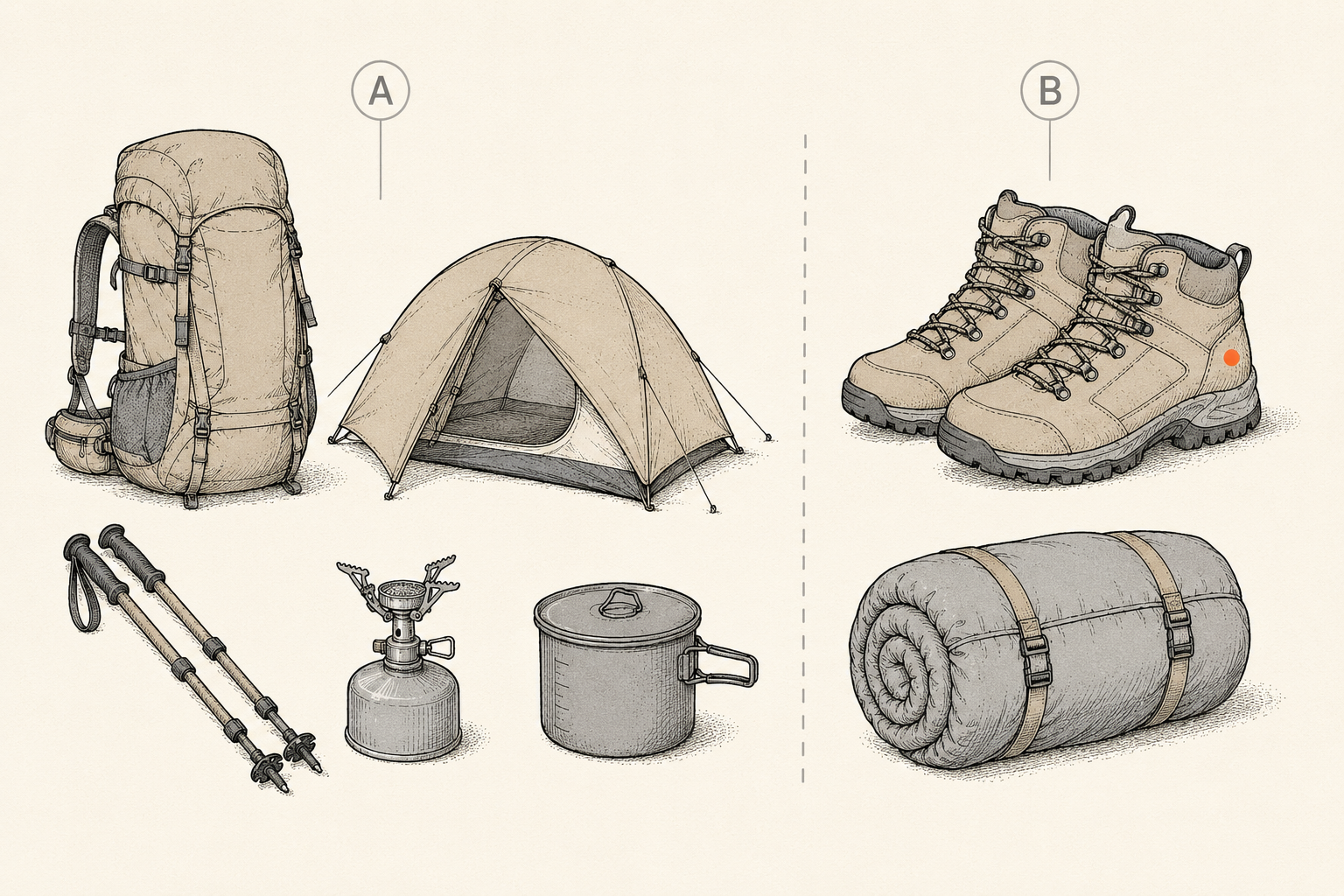
Good outdoor gear is built to last, so a used pack or tent often has most of its life ahead of it. Where to shop: outdoor consignment and gear-swap events, retailer used-gear programs (several major outdoor retailers now sell inspected trade-in gear online), general marketplaces, and club swap meets. Good to buy used: backpacks, tents, trekking poles, stoves, cookware, sleeping pads (inspect for leaks), durable items where a deal is just a deal. Buy new (or be very careful used): sleeping bags (used insulation, especially down, may have lost loft, check carefully), and anything safety-critical. And the one firm rule: footwear you buy new and fit yourself (Chapter 3), used boots have molded to someone else’s feet and are a blister guarantee. Inspect used gear before buying: check zippers, seams, buckles, pole segments, and (for tents) that the waterproof coating isn’t peeling.
What to Buy New (and Why)
Spend your new-gear budget on the few things where fit, safety, and daily use justify it: hiking footwear (fitted to your feet), good socks, and, once you know your preferences, the items you’ll use every trip and want to last.
Footwear leads the list because it’s the one thing that must fit your feet and directly determines whether every hike is comfortable or miserable (Chapter 3). Socks are cheap enough that new is easy and worth it. Beyond those, the logic for buying new shifts from necessity to preference: once you’ve backpacked a few times and know what you like, the pack, bag, and shelter you’ll use on every trip for years are worth buying new (or lightly used) in exactly the specification you want. Quality gear, cared for, lasts a very long time, which reframes the price. A $250 pack used for ten years is $25 a year. Buy the right thing once, and the per-trip cost of backpacking drops to almost nothing.
What It Actually Costs
A realistic budget: trying backpacking via rental and borrowed gear can cost well under $150 for a first trip; building a solid owned kit over time runs roughly $500–1,000 for quality mid-range gear, with footwear and the “big three” (pack, shelter, sleep system) as the main expenses. After that, each trip costs only food, fuel, and permits.
Here’s the shape of the money, in current-era ranges (prices vary by brand, sales, and region, treat these as planning figures, not quotes):
| Item | Budget/used | Quality mid-range (new) |
|---|---|---|
| Backpack | $60–120 | $180–300 |
| Tent (2-person) | $80–150 | $250–450 |
| Sleeping bag | $80–150 | $200–400 |
| Sleeping pad | $40–80 | $120–200 |
| Stove + cookware | $30–60 | $80–160 |
| Water filter | $25–45 | $40–100 |
| Boots/trail shoes (new) | $100–160 | $150–250 |
| Small gear (headlamp, poles, etc.) | $60–120 | $150–300 |
The reassuring math: the big numbers are one-time. Rent to start, and your first trip is cheap. Build a kit gradually, a piece per season, watching sales and the used market, and you spread the cost painlessly. And once you own it, backpacking becomes one of the cheapest ways to spend a weekend: after the gear, your only per-trip costs are food, a little stove fuel, permits, and gas to the trailhead. Few active hobbies are cheaper to keep doing.
Where to Save and Where Not To
Save on: pack, tent, stove, cookware, small accessories, durable items where budget or used versions work fine. Don’t skimp on: footwear (fit and comfort), the sleeping system’s warmth (a cold night ruins a trip), and anything safety-critical (water treatment, navigation, first aid).
The principle is to spend where a failure or poor fit has real consequences and save everywhere else. A budget pot boils water exactly as well as a premium one. A budget headlamp lights the trail fine. But cold-rated sleep gear turns nights into ordeals, ill-fitting boots turn every mile into pain, and cut-rate safety gear (a filter that clogs, a flashlight that dies) fails exactly when it matters. Put your money where comfort and safety live; take the bargain everywhere else. That single rule keeps a budget kit from becoming a miserable one.
Trail Notes
- The smart order: rent or borrow to try, buy used as you commit, buy new only where fit/safety/daily-use demand it.
- Rent the big items (~$10–30 per item per weekend, or ~$50–150 for a full package); university outdoor programs are often cheapest. (Verify prices locally.)
- Borrow first, experienced hikers lend spare gear and free advice. The community is welcoming.
- Buy used: packs, tents, poles, stoves, cookware, pads (30–60% off). Buy new: boots (always) and sleeping bags (check loft).
- Realistic cost: under ~$150 to try via rental; ~$500–1,000 to build a solid owned kit over time. Then only food, fuel, permits per trip.
- Spend where failure hurts (feet, warmth, safety); save everywhere else.
Rookie Mistakes
- Buying a full new kit before trip one. You’ll choose wrong on gear you haven’t learned yet. Rent, then buy right.
- Used boots. They’re molded to a stranger’s feet, a guaranteed blister. Footwear is the one always-new item.
- Cheaping out on the sleep system. A cold night wrecks the whole trip. Warmth is not where you save.
- Overspending on the pot and skimping on the filter. Backward. Bargain the durable stuff; invest in what fails dangerously.
- Ignoring university and club programs. They rent quality gear cheaply and lend expertise for free. Most beginners never check.
FAQ
Where can I rent backpacking gear? Outdoor specialty shops, dedicated gear-rental companies (some ship to you), and, often cheapest, university outdoor recreation programs, many open to the public. They rent tents, packs, sleeping bags, pads, and stoves, typically around $10–30 per item per weekend or $50–150 for a full package. Some large retailers have scaled back rentals, so check local outfitters and campus programs.
Is it worth buying used backpacking gear? Very, quality outdoor gear is durable and holds up well secondhand, so you can save 30–60 percent on proven equipment. Packs, tents, trekking poles, stoves, cookware, and pads are all great used. Buy sleeping bags cautiously (check that the insulation still lofts) and always buy footwear new, since used boots are molded to someone else’s feet.
How much does it cost to start backpacking? You can try it for well under $150 by renting or borrowing the big items for a first trip. Building your own solid mid-range kit runs roughly $500–1,000 over time, with footwear and the “big three” (pack, shelter, sleep system) as the main costs. After that, each trip costs only food, fuel, and permits.
What backpacking gear should I buy new versus used? Buy new: hiking footwear (must fit your feet) and good socks, always; plus the everyday-use items you’ll want in a specific spec once you know your preferences. Buy used to save: backpacks, tents, trekking poles, stoves, cookware, and sleeping pads. Check used sleeping bags carefully for lost loft, or buy those new.
How can I go backpacking cheaply? Rent or borrow the expensive big items for your first trips, buy the rest used as you commit, and reserve new purchases for footwear and safety gear. Shop off-season sales and the used market for the “big three.” Once you own a kit, backpacking is one of the cheapest active hobbies, trips cost only food, fuel, and permits.
Read offline
The whole book as one PDF — every chapter, every diagram.