Chapter 21
Leave It Better
Leave No Trace and campfires
Everything you’ve learned so far has quietly served one idea: that the backcountry should be as wild and beautiful after your visit as before it. Leave No Trace is the name for that ethic, and it’s the framework that ties the whole book together, the reason we camp 200 feet from water, pack out our trash, and store our food. This chapter states the principles directly and covers the one topic where good intentions most often go wrong: the campfire.
What Is Leave No Trace?
Leave No Trace is a set of seven principles for enjoying the outdoors while minimizing your impact, so that natural places stay healthy and wild for the wildlife that lives there and the people who come after you. It’s the ethical foundation of modern backpacking, and most of its practices are things this book has already taught in context.
Leave No Trace (often shortened to LNT) isn’t a law but a widely adopted ethic, developed and promoted by outdoor organizations and land agencies, that gives backpackers a clear framework for responsible travel. The core idea is in the name: leave the outdoors as you found it, ideally better, so your presence doesn’t degrade it. As the backcountry sees more visitors, this ethic becomes more essential; a place loved carelessly by enough people is a place destroyed. The good news is that you’ve already learned most of LNT as practical skills throughout this book, camping on durable ground, packing out trash, the cathole, food storage. The seven principles just organize those habits into a memorable framework. Here they are.
The 7 Leave No Trace Principles
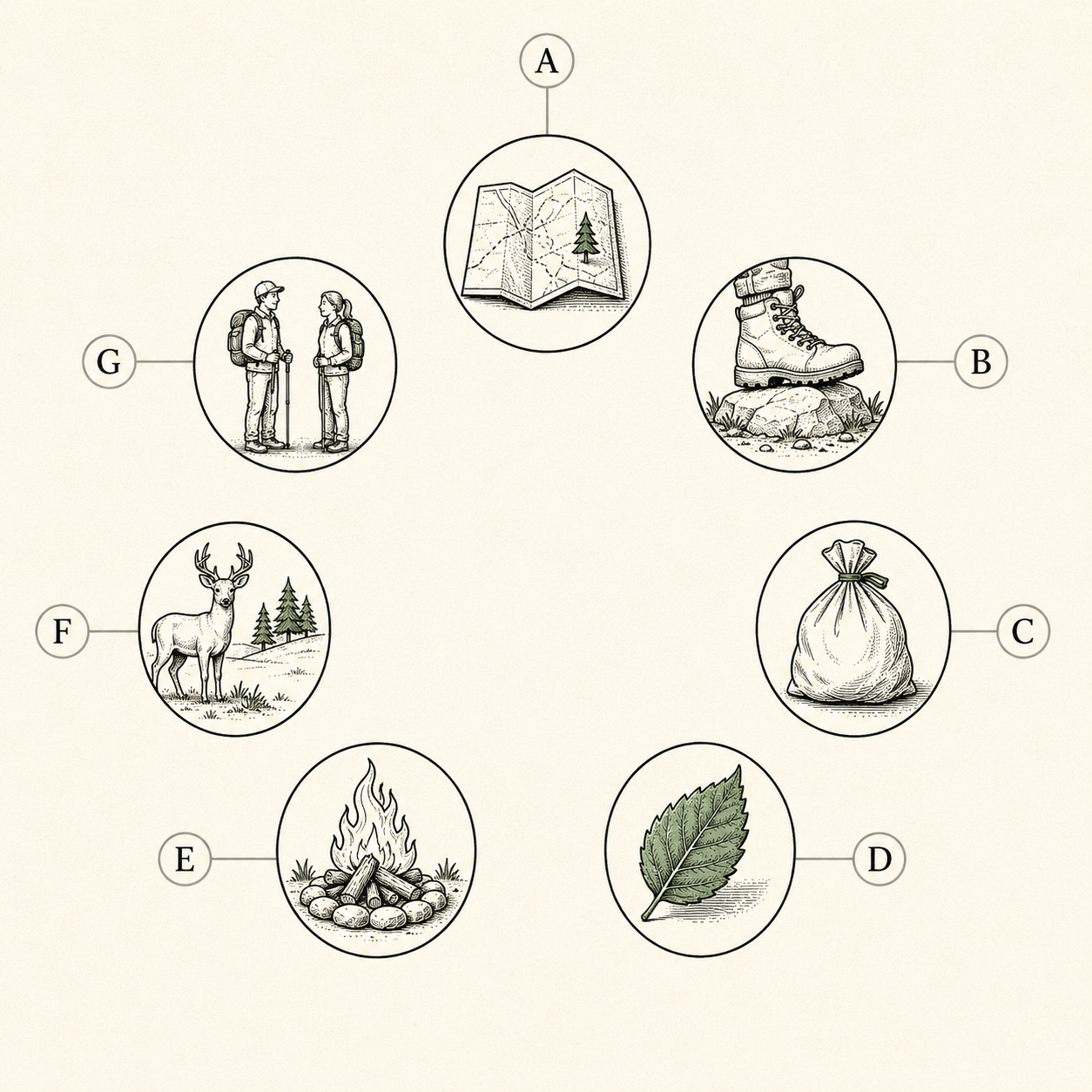
The seven principles are: (1) Plan ahead and prepare, (2) Travel and camp on durable surfaces, (3) Dispose of waste properly, (4) Leave what you find, (5) Minimize campfire impacts, (6) Respect wildlife, and (7) Be considerate of others. Together they cover every way a visitor can affect a wild place.
Each principle, in practice:
- Plan ahead and prepare. Know the rules and conditions, bring the right gear, and plan to reduce impact and risk (Chapter 14). Good preparation prevents the emergencies and shortcuts that cause damage.
- Travel and camp on durable surfaces. Stay on established trails and campsites; walk and camp on rock, gravel, dry grass, or snow, not fragile vegetation or soft ground that scars (Chapter 18). Don’t cut switchbacks.
- Dispose of waste properly. “Pack it in, pack it out”, carry out all trash, leftover food, and litter. Handle human waste with catholes or by packing it out (Chapter 20). Wash 200 feet from water.
- Leave what you find. Leave rocks, plants, artifacts, and natural objects as you found them for others to discover. Don’t build structures or dig trenches. Take photos, not souvenirs.
- Minimize campfire impacts. Use a stove for cooking; where you have a fire, keep it small, in an existing fire ring, and fully extinguished, and skip it when conditions or rules say so (the rest of this chapter).
- Respect wildlife. Observe from a distance, never feed animals (Chapter 23), store food securely, and control the impulse to approach. Feeding wildlife, deliberately or through careless food storage, harms and often kills them.
- Be considerate of others. Yield appropriately on trails, keep noise down (let natural sounds prevail), camp out of sight where you can, and respect others’ experience of the quiet.
Learn these seven, and you have the whole ethic. They aren’t restrictions on your fun, they’re what keeps the places you love worth loving.
Should You Have a Campfire?
Increasingly, the answer is no, use your stove for cooking, and treat a campfire as an optional luxury only where it’s legal, safe, and low-impact. In much of the backcountry, fires are restricted, banned seasonally, or simply a bad idea, and the modern ethic leans strongly toward going fireless.
The campfire has powerful romance, warmth, light, a place to gather, but its costs have shifted the ethic firmly toward stoves. Fires scar the land (fire rings, scorched soil, sterilized ground), consume deadwood that ecosystems need, and, most seriously, start wildfires, which have grown catastrophically more common and destructive. As a result, fires are banned or restricted across huge areas for much of the year, and even where legal they’re often discouraged. You cook on your stove (Chapter 10), so a fire is never necessary, it’s a luxury. Enjoy one where it’s clearly legal, safe, and appropriate; otherwise, embrace the fireless camp (a headlamp and the stars do fine). If you do want a fire, the rules below are non-negotiable.
Legal & Safety Fire regulations are law, and they change constantly with conditions. Always check current fire restrictions with the land-managing agency before your trip, many areas prohibit all fires (and sometimes even stoves) during dry, high-danger periods, and violating a fire ban can carry serious fines and, if a wildfire results, immense liability. Human-caused wildfires kill people, destroy homes, and devastate the wild places you’re there to enjoy. When in doubt, don’t have a fire. No campfire is worth a wildfire.
How to Build a Campfire Safely
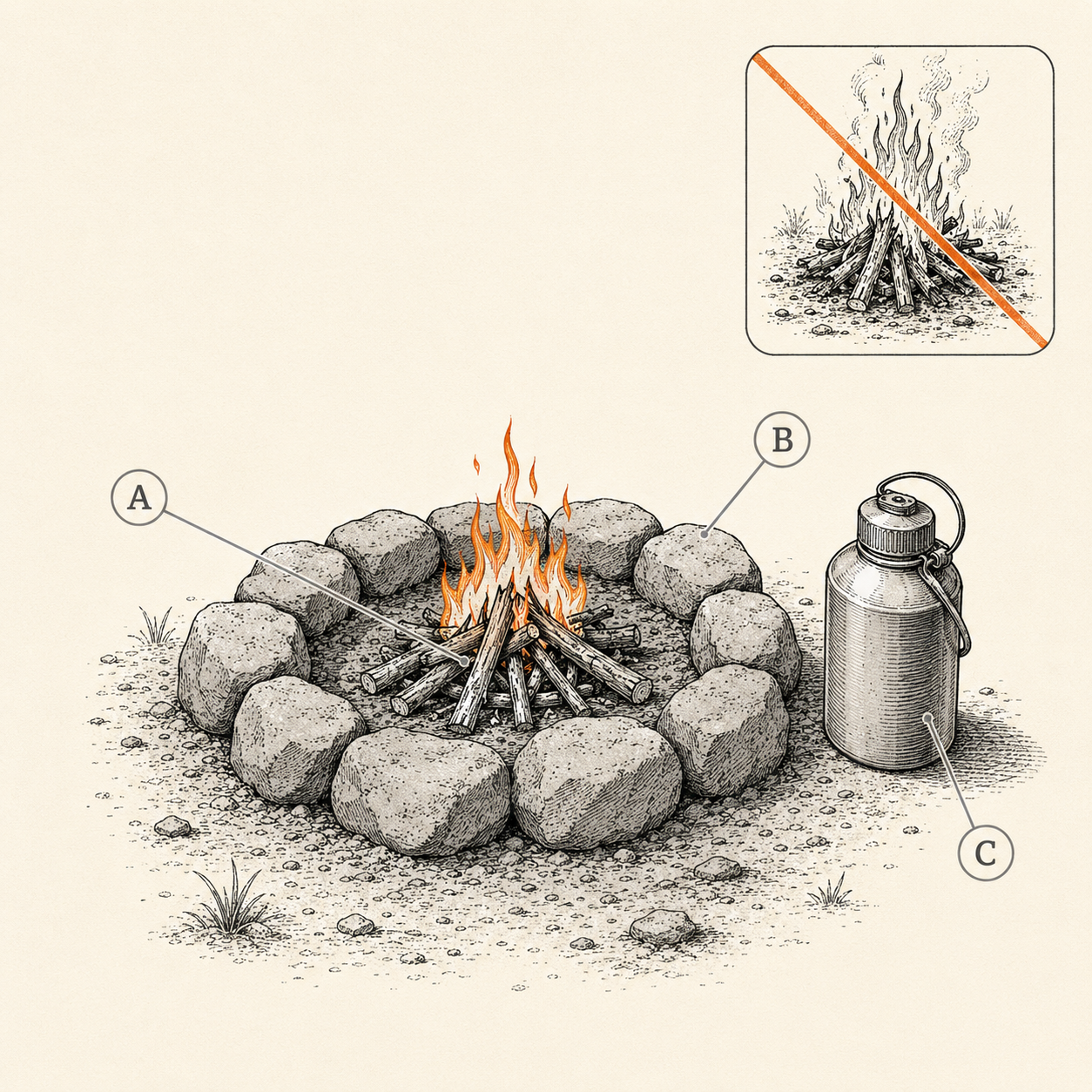
Where fires are permitted, build a small one in an existing fire ring on bare mineral soil, using only small dead-and-down wood, kept modest, never left unattended, and extinguished completely with water until cold to the touch. Safety and low impact are the whole point.
If you’ve confirmed fires are legal and conditions are safe, do it right:
- Use an existing fire ring. Build only in an established fire ring on bare soil, never make a new one. No existing ring and none provided? That’s a sign to skip the fire.
- Gather only small dead-and-down wood. Collect only wood that’s already dead and on the ground, no thicker than your wrist (it burns completely to ash). Never cut live trees or branches, and never strip standing dead trees (they’re wildlife habitat). Gather from a wide area, not one spot.
- Keep it small. A small fire is all you need for warmth and ambiance, knee-high flames at most, no bonfires. Small fires are safer, use less wood, and burn down to manageable ash.
- Never leave it unattended. Someone watches the fire at all times. An unattended fire is how wildfires start.
- Put it out completely. Let the wood burn down to ash, then drench it with water, stir the ashes, drench again, and repeat until it’s cold to the touch, no heat, no smoke, no glowing embers. If it’s too hot to touch with your bare hand, it’s not out. “Out” means dead cold, every time.
The extinguishing step is the one people rush and the one that starts wildfires. Do it thoroughly, with plenty of water, every single time, a fire that seems out can smolder in roots or duff for hours and reignite.
Respecting Wildlife and the Land
Respect wildlife by observing from a distance, never feeding animals (directly or through careless food storage), and controlling pets, and respect the land by leaving everything as you found it. These aren’t just courtesies; they protect the animals’ survival and the place’s integrity.
Two LNT principles deserve emphasis because beginners most often slip on them. Respect wildlife (principle 6): watch animals from a distance and never feed them, a fed animal loses its fear of humans, becomes aggressive or dependent, and often ends up killed as a “problem animal” (this is why food storage, Chapter 23, is an act of wildlife protection). Store food securely, keep your distance, and never approach or crowd animals for a photo. If you bring a dog, keep it controlled and check that it’s even allowed (many areas prohibit dogs to protect wildlife). Leave what you find (principle 4): resist collecting rocks, flowers, antlers, or artifacts, if everyone took “just one,” the place would be stripped. Don’t carve trees, build rock cairns, or dig. Leave the site natural. The ethic in both is humility: you’re a visitor in someone else’s home and a place older than you, and you leave it intact for the next visitor and the creatures who never leave.
Being Considerate of Others
Be considerate of other visitors: keep noise down so natural quiet prevails, yield appropriately on the trail, camp and take breaks out of others’ sight and earshot where possible, and generally help preserve everyone’s sense of solitude and connection with nature.
The last principle is about sharing the experience. Most people come to the backcountry for quiet and solitude, so the biggest courtesy is keeping noise down, no loud music (the near-universal trail complaint; use headphones if you must), keeping voices moderate, letting the natural soundscape prevail. On the trail, follow local yielding conventions (commonly, uphill hikers have the right of way, and everyone yields to horses; step to the durable side to let others pass). When you camp or rest, choose spots out of sight and earshot of others where you can, so each party feels alone in the wild. Manage your group’s impact on the shared experience, a large loud group can dominate a quiet place. And extend simple trail friendliness: a nod, a greeting, help if someone needs it. The backcountry community is famously kind; being considerate keeps it that way and preserves for everyone the very solitude they came to find.
Trail Notes
- Leave No Trace is the ethic tying the whole book together: leave wild places as good as or better than you found them.
- The 7 principles: plan ahead, durable surfaces, dispose of waste properly, leave what you find, minimize campfire impact, respect wildlife, be considerate of others.
- Cook on your stove; treat campfires as an optional luxury only where legal, safe, and low-impact. The ethic leans fireless.
- Always check current fire restrictions before every trip, fires (and sometimes stoves) are widely banned in dry seasons. Violations carry fines and wildfire liability.
- Legal fires: existing ring, small dead-and-down wood, kept small, never unattended, drenched cold before leaving.
- Never feed wildlife, take only photos, keep noise down. Respect the animals, the land, and the next person.
Rookie Mistakes
- Treating a campfire as a given. It’s often illegal or unsafe. Check restrictions, cook on your stove, and go fireless when in doubt.
- A fire “put out” that’s still warm. Smoldering roots reignite for hours. Drench it, stir, drench again, cold to the touch or it’s not out.
- Feeding wildlife or storing food carelessly. A fed animal becomes a dead animal. Never feed; always store food securely.
- Taking souvenirs. One rock or flower per visitor strips a place bare. Leave what you find; take photos.
- Loud music on the trail. It’s the number-one complaint out there. Keep the natural quiet; use headphones if you must.
FAQ
What are the 7 principles of Leave No Trace? (1) Plan ahead and prepare, (2) travel and camp on durable surfaces, (3) dispose of waste properly, (4) leave what you find, (5) minimize campfire impacts, (6) respect wildlife, and (7) be considerate of others. Together they cover every way a visitor affects a wild place, and most translate into the practical camping and hygiene habits this book teaches throughout.
What does Leave No Trace mean? It’s an outdoor ethic, a set of seven principles for enjoying nature while minimizing your impact, so wild places stay healthy for wildlife and future visitors. In practice it means leaving a place as you found it or better: packing out all trash, camping on durable ground, disposing of waste properly, not disturbing wildlife or natural features, and respecting other people’s experience.
Can you have a campfire while backpacking? Sometimes, but increasingly not. Fires are banned or restricted across large areas, especially in dry seasons, and the modern ethic favors cooking on a stove and going fireless. Always check current fire restrictions with the land-managing agency first. Where fires are legal and safe, keep them small, in an existing ring, and fully extinguished. When in doubt, skip it, no campfire is worth a wildfire.
How do you build a safe campfire? Where it’s legal and conditions are safe: build a small fire in an existing fire ring on bare soil, using only dead-and-down wood no thicker than your wrist. Keep the flames low, never leave it unattended, and extinguish it completely, drench with water, stir the ashes, and repeat until it’s cold to the touch. If it’s too hot to touch, it’s not out.
How do you put out a campfire completely? Let the wood burn down to ash, then drench it thoroughly with water, stir the ashes and embers, and drench again, repeating until everything is cold to the touch, with no heat, smoke, or glowing embers. A fire that seems out can smolder in roots or soil for hours and reignite, so don’t stop until you can safely hold your hand near the ashes. Never leave a warm fire.
Read offline
The whole book as one PDF — every chapter, every diagram.