Chapter 24
The First Night Out
Your first overnight, start to finish
Everything in this book has been building to one thing: your first night sleeping in the backcountry, with everything you need on your back. This final chapter puts it all together, a complete checklist, a model first-trip plan, an honest preview of what will go wrong, and the reassurance that all of it is normal. You’re more ready than you feel. Let’s get you out there.
You’re Ready, Here’s How It Fits Together
Your first overnight combines skills you’ve already learned into one trip: pick an easy route, pack the right gear, hike in, make camp, spend the night, and hike out. Nothing here is new, this chapter just assembles the pieces into a plan you can follow this season.
Take a breath and recognize how much you now know. You can dress for the mountains (Chapter 2), pick footwear and prevent blisters (Chapters 3, 5), choose and fit a pack (Chapter 6), sleep warm (Chapters 7, 8), pitch a tent (Chapter 9), cook (Chapter 10), treat water (Chapter 11), plan and permit a trip (Chapter 14), pack the pack (Chapter 15), navigate (Chapter 16), make camp (Chapter 18), handle the bathroom and Leave No Trace (Chapters 20, 21), and respond to weather and wildlife (Chapters 22, 23). The first overnight is just those skills, in sequence, on a forgiving trip. You’ve been preparing the whole book. Now you execute.
The Complete Backpacking Checklist
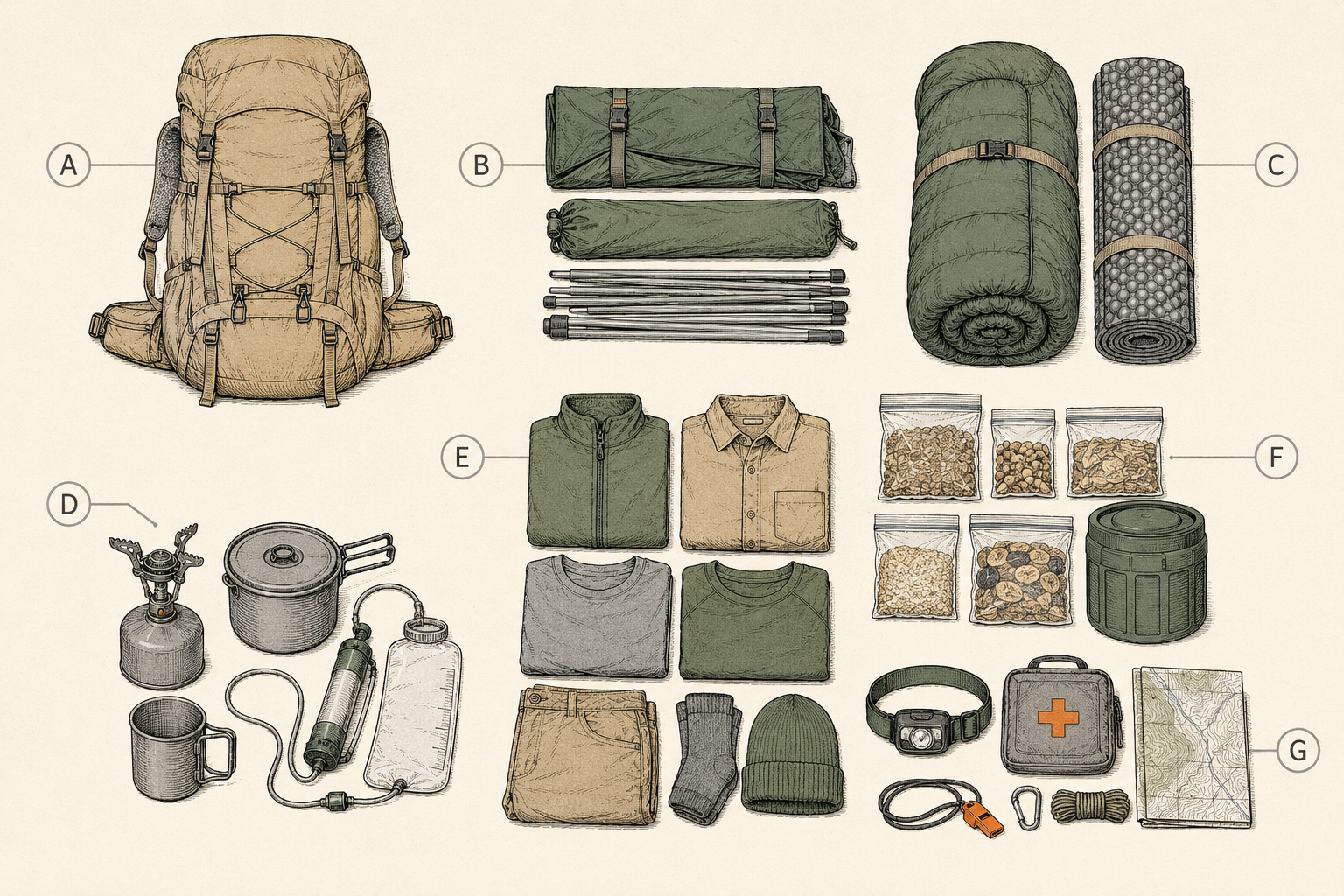
Use a complete checklist to pack for your first overnight, organized by category, so nothing essential is forgotten. Lay everything out against this list, then pack it (Chapter 15). (A printable version is in Appendix A.)
The Big Three & Sleep
- Backpack (40–50 L, fitted) with rain cover or liner
- Tent with rainfly, poles, stakes (+ footprint if used)
- Sleeping bag (rated for the night’s low)
- Sleeping pad (R-value for the season)
Clothing (season-dependent)
- Worn: base layer, hiking pants/shorts, socks, footwear, hat
- Packed: insulating midlayer, rain shell, warm hat & gloves, extra socks & base layer, dedicated dry sleep clothes
Kitchen & Water
- Stove + fuel; lighter/matches
- Pot, long spoon, insulated mug
- Water filter/treatment + backup (tablets)
- Water bottles/reservoir
Food
- Meals + snacks (~1.5–2 lb / 0.7–0.9 kg per person per day) + emergency ration
- Bear canister or hang cord (per area rules)
Navigation & Electronics
- Phone with offline maps + power bank
- Paper map + compass
- Headlamp + spare batteries
The Ten Essentials safety layer (much overlaps above)
- First-aid kit; sun protection (sunscreen, sunglasses, sun hat); knife/multitool; fire starter; emergency shelter (space blanket); extra food, water, clothes; whistle
Health & Hygiene
- Toilet: trowel, TP in sealed bag, hand sanitizer, trash bags
- Personal: toothbrush/paste, small towel/bandana, medications, insect repellent, lip balm
- Menstrual products if needed (packed out)
Documents & Extras
- Permit (if required), ID, some cash
- Trip plan left with someone (Chapter 14)
- Trekking poles (optional); repair kit; camp shoes (optional)
Adjust for season, trip length, and conditions, but this is the skeleton. Lay it all out, check each item off, then pack. The night-before pack-out (never the trailhead) is where forgotten fuel and spoons get caught.
A Model First Overnight
For a great first overnight, plan a short trip, a few miles to an established campsite, one night, and out the next day, somewhere popular and forgiving. This low-stakes trip lets you test your gear and skills where a mistake is only an inconvenience.
Here’s a first trip designed to succeed:
- The route: 3–5 miles (5–8 km) in to an established campsite with reliable water nearby, on a well-marked, reasonably popular trail with modest elevation gain. One night. Hike out the same way the next day. (Choosing it: Chapter 14.)
- Day 1: Start mid-morning after an early drive, so you reach camp by mid-afternoon with hours of daylight. Hike in at a relaxed pace, treating water and snacking. Reach camp, set up (shelter first, Chapter 18), filter water, cook an early dinner, store your food, and enjoy your first evening out.
- Night: Sleep in your dry layers, headlamp handy. It may take a while to fall asleep in a new place, that’s normal. Listen to the quiet.
- Day 2: Wake, make coffee and breakfast, break camp (leave no trace, Chapter 21), and hike out. Arrive at the car proud and already planning the next one.
Go with an experienced friend if you possibly can, nothing accelerates learning like one trip alongside someone who’s done it, and their presence turns first-trip anxiety into fun. Going solo is fine too once you’re confident, but a first-timer paired with a mentor is the gentlest possible entry.
What Will Go Wrong (and Why It’s Fine)
Expect your first trip to be imperfect: something will be forgotten, uncomfortable, or harder than expected. This is completely normal, first trips are shakedowns, and the goal is to learn, not to be flawless. A rough first trip is still a successful first trip.
Let’s set honest expectations so nothing throws you. On your first overnight you will probably: forget or wish you’d brought something; find your pack heavier than ideal; sleep poorly the first night (new place, hard-ish ground, every unfamiliar sound); fumble the stove or the tent the first time under real conditions; and discover a gear or comfort issue you’ll fix next time. All of this is normal and expected. The first trip is a shakedown, its whole purpose is to reveal what you don’t yet know, on a trip short and safe enough that those lessons cost only mild discomfort. Every experienced backpacker has a rough-first-trip story, and they’re usually told with fondness. So don’t aim for a flawless trip; aim to get out, stay safe, learn a pile of things, and come home wanting to go again. That’s a complete success, and it’s almost certainly what will happen.
Keep a Post-Trip Log
After each trip, jot down what worked, what didn’t, what you forgot, and what you’d change. This log is the fastest way to improve, it turns every trip into concrete lessons for the next one.
The habit that turns beginners into competent backpackers fastest is simple reflection. When you get home (or in your tent the last night), note: What did I forget or wish I’d had? What did I carry but never use? What was uncomfortable, and how do I fix it? What went well? This log (a phone note works) becomes your personal, customized field manual, after a few trips it predicts you better than any generic advice, guiding what to buy, what to leave home, and how to pack. It’s also how you dial in the weight: the “never used” items are your first candidates to leave behind (Chapter 15). Review it before your next trip. Improvement in backpacking isn’t mystical; it’s iterative, and the log is the iteration.
Growing From Here
After your first successful overnight, extend gradually: more nights, longer distances, new terrain and seasons, and eventually the bigger trips that first drew you to backpacking. Build on success incrementally, the same way you built up day hikes.
The progression from here mirrors Chapter 1’s day-hike ladder. Once you’ve nailed a one-night trip, try two nights, then a long weekend, adding a night and some distance as each length becomes comfortable. Explore new terrain and seasons as your skills grow, different landscapes, shoulder-season conditions, more remote routes, each a fresh, manageable challenge on your foundation. In time, the trips that first inspired you, a week on a famous trail, a high alpine basin, a section of a long-distance path, become realistic goals you’re genuinely prepared for. And consider giving back: as you gain experience, take a new beginner on their first trip, the way someone might have taken you. The backcountry community grows by mentorship, and there’s a special satisfaction in watching someone have the first-night experience you’re about to have. Build gradually, stay humble with the mountains, and the horizon of what’s possible keeps expanding.
A Last Word
Backpacking is one of the most rewarding things a person can do with their own two feet, accessible, affordable once you’re geared up, and endlessly deep. You have the knowledge now. The only thing left is to go.
Everything in these pages reduces to a simple invitation: the wild places are out there, closer than you think, and now you know how to visit them well, safely, comfortably, and lightly enough that they stay wild for the next person. The gear and the skills were never the point; they’re just what lets you be out there, at ease, when the light goes gold over a ridge and your camp is set and there’s nowhere you need to be. That’s the thing the whole book was for.
So pick an easy trail. Check the weather, pack your bag, tell someone your plan. Start small, exactly like Chapter 1 said, the mountains will wait, and they’ll still be there for the bigger trips once these first ones are behind you. Your first night out is going to be imperfect and wonderful and the beginning of something. Go find out. The trail starts wherever you decide to begin.
Trail Notes
- The first overnight is just the book’s skills in sequence on a forgiving trip. You’re more ready than you feel.
- Pack from the complete checklist (Appendix A): big three + sleep, clothing layers, kitchen & water, food, navigation, the Ten Essentials, hygiene, documents. Lay out, check off, pack in zones.
- Model first trip: 3–5 mi (5–8 km) to an established site, one night, popular forgiving trail, ideally with an experienced friend. Arrive with daylight to spare.
- Expect imperfection, forgotten items, a heavy pack, a poor night’s sleep, fumbled gear. It’s a shakedown; a rough first trip is still a success.
- Keep a post-trip log (worked / didn’t / forgot / change), the fastest way to improve and lighten your kit.
- Grow gradually: more nights, more distance, new terrain and seasons. Consider mentoring the next beginner.
Rookie Mistakes
- Making the first trip too big. Long, remote, or hard first trips turn learnable lessons into real trouble. Keep it short and forgiving.
- Expecting perfection. You’ll forget something and sleep badly. That’s the shakedown working, not failing.
- Packing at the trailhead. The forgotten fuel and spoon happen in the morning rush. Lay it all out and pack the night before.
- Not writing anything down. Without a log you re-learn the same lessons every trip. Two minutes of notes compounds fast.
- Quitting after a rough first night. Everyone’s first trip is imperfect. The second is better, and the tenth is transformative. Go again.
FAQ
What do I need for my first backpacking trip? The big three (fitted pack, tent, sleep system with a bag and pad), clothing layers (worn plus packed insulation, rain shell, and dry sleep clothes), a stove and cookware, water treatment, food (~1.5–2 lb / 0.7–0.9 kg per person per day), navigation (phone with offline maps plus paper map and compass), a headlamp, the Ten Essentials safety layer, and hygiene items. Use the complete checklist in Appendix A, lay everything out, and pack it in zones.
How long should my first backpacking trip be? Short, about 3 to 5 miles (5–8 km) to an established campsite, one night, and out the next day, on a well-marked, popular trail with modest elevation gain. A low-stakes first trip lets you test your gear and skills where a mistake is only an inconvenience, close to help. Save longer and more remote trips for after you’ve got a successful overnight behind you.
What are common mistakes on a first backpacking trip? Forgetting an item, carrying too much weight, sleeping poorly the first night, and fumbling gear like the stove or tent under real conditions, all completely normal on a shakedown trip. The bigger mistakes to actually avoid: choosing too ambitious a first route, packing at the trailhead instead of the night before, and getting discouraged by an imperfect first outing. Rough first trips are still successful ones.
Should I go on my first backpacking trip alone? If you can, go with an experienced friend, nothing accelerates learning or eases first-trip nerves like a trip alongside someone who’s done it. Going solo is fine once you’re confident and on a short, popular route, but a mentored first trip is the gentlest, safest entry. Either way, keep the trip short and forgiving and leave a trip plan with someone.
How do I get better at backpacking? Go regularly and keep a post-trip log, note what worked, what you forgot, what you never used, and what to change. That record improves your packing, lightens your kit, and dials in your systems faster than any generic advice. Then build gradually: add nights and distance as each length gets comfortable, and take on new terrain and seasons on the foundation of successful smaller trips.
# BACK MATTER
Read offline
The whole book as one PDF — every chapter, every diagram.